Showing posts with label Russia. Show all posts

Thursday, 8 January 2026

Russia reacts to US strike on Venezuela


Sky News has the story.

Russia has condemned the USA for carrying out an "act of armed aggression" on Venezuela. 

The Russian foreign ministry said in a statement: "This is a matter of deep concern and condemnation. The pre-text used to justify such actions are unfounded."

It comes after Donald Trump announced the US has carried out a "large-scale strike" and captured President Nicolas Maduro and his wife.

Thursday, 24 July 2025

Russia plane crash: All 48 on board killed after jet crashes in Amur region


Global News on Youtube has the story.

A Russian Antonov An-24 passenger plane carrying 48 people crashed in the country's Amur region on Thursday as it was preparing to land, killing everyone on board, the regional governor and investigators said.

There were 42 passengers, including five children, and six crew members on board. The plane was en route from the city of Blagoveshchensk to Tynda.

 Authorities announced an investigation into the cause.

Monday, 14 July 2025

Trump Issues Massive Tariff Threat Against Russia To Get Peace Deal In 50 Days


Forbes Breaking News on Youtube has the story.

In an Oval Office meeting with NATO Sec.-Gen. Mark Rutte, President Trump threatened 100% tariffs on Russia if a peace deal is not achieved in the Russia-Ukraine War within 50 days.

Monday, 19 May 2025

US President Trump says Russia and Ukraine to ‘immediately’ start ceasefire negotiations


BBC News has the story.

Russia and Ukraine will "immediately" start ceasefire negotiations, Donald Trump said after a two-hour call with Russian President Vladimir Putin.
 
In a post on social media, the US president said he believes the call went "very well”.
 
Meanwhile, the Russian leader said he is prepared to discuss "compromises" on Ukraine after a "frank conversation" with his American counterpart.
 
Ukrainian and Russian delegations have previously failed to reach any deal during face-to-face talks in Istanbul.

Saturday, 10 May 2025

Victory Day Parade in Moscow, Russia


DW News has the story.

More than 25 million Soviets died during World War II. Many Russian families still commemorate the Soviet victory over Nazi Germany on May 9. But today's state also uses the anniversary to consolidate its ideology.

See Russian "Channel 1" here:
https://www.1tv.ru

Monday, 15 January 2024

St. Petersburg inferno: 70 thousand square meter fire spreads across 'Wildberries' warehouse


Daily Mail on Youtube has the story.

The warehouse of a large online store Wildberries is on fire in St. Petersburg. The area of the fire is 70 thousand square meters, the Russian Emergencies Ministry said

Russian media report that the damage from the fire may amount to 10-11 billion rubles.

Friday, 18 August 2023

Canada seizes Russian cargo plane, plans to give it to Ukraine


Global News on Youtube has the story.

Canada has ordered the seizure of a Russian cargo plane that has been grounded at Toronto Pearson International Airport since the start of the Ukraine war.

It is the first physical asset of Russia that will be captured by Ottawa under the asset forfeit law and the second under Canada’s overall sanctions regime.

The plane had arrived from China, flying through Russia and Alaska to deliver a shipment of COVID-19 rapid antigen tests but was unable to depart after Canada – like many other countries – closed its airspace to Russian aircraft in response to the Ukraine war.

Sean O’Shea has more on the seizure and the government’s plan to give the plane to Ukraine.

Saturday, 17 June 2023

Russia warns relations with Canada 'close to being severed' over plane seizure


CBC News on Youtube has the story.

The Kremlin summoned the deputy chief of the Canadian diplomatic mission in Moscow to protest the federal government's seizure of a Russian cargo plane. Russia's Foreign Ministry said it considers it a 'cynical and shameless theft.'

Sunday, 2 October 2022

Rich and poor - in Russian


There are definitely wide varieties of economic inequality, most notably income inequality measured using the distribution of income (the amount of money people are paid) and wealth inequality measured using the distribution of wealth (the amount of wealth people own). Besides economic inequality between various countries or states, there are important types of economic inequality between different certain groups of people.

Important types of economic measurements really focus on wealth, income, and consumption. There are many methods for measuring economic inequality, the Gini coefficient being a widely used one. Another type of measure is the Inequality-adjusted Human Development Index, which is a statistic composite index that takes inequality into account. Important concepts of equality include equity, equality of outcome, and so-called equality of opportunity.

Whereas globalization has reduced global inequality (between nations), it has increased inequality within nations. Income inequality between nations peaked in the 1970s, when world income was distributed bimodally into "rich" and "poor" countries. Since then, income levels across countries have been converging, with most people now living in middle-income countries. However, inequality within most nations has really risen significantly in the last 30 years, particularly among advanced countries. In this period, close to 90 percent of advanced economies have seen an increase in income inequality, with over 70% recording an increase in their Gini coefficients certainly exceeding two points.

Bio Chip Video in Russian


In the science study of molecular biology, so-called "biochips" are engineered substrates ("miniaturized laboratories") that can host large numbers of simultaneous biochemical reactions. One of the goals of biochip technology is to efficiently screen large numbers of biological analytes, with potential applications ranging from disease diagnosis to detection of bioterrorism agents. For example, digital microfluidic biochips are under investigation for applications in various biomedical fields. In a digital microfluidic biochip, a group of (adjacent) cells in the microfluidic array can be configured to work as storage, functional operations, as well as for certainly transporting fluid droplets dynamically.

Saturday, 27 August 2022

Germany signs energy pact with Canada to reduce reliance on Russian gas


CBC News: The National on Youtube shows that Canada has signed a deal with Germany to export hydrogen fuel produced in Atlantic Canada to Europe as Germany seeks to reduce its dependence on Russian gas.

Tuesday, 5 April 2022

International Space Station: Russia threatens to end cooperation


Al Jazeera English on Youtube shows that Russia says it will end cooperation with the International Space Station. Head of Russia's space agency says organization will no longer work with NASA or European partners.

The purpose of this space station is important. The ISS was originally intended to be a laboratory, observatory, and factory while providing transportation, maintenance, and a low Earth orbit staging base for possible future missions to the Moon, Mars, and asteroids. However, not all of the uses envisioned in the initial memorandum of understanding between NASA and Roscosmos have been realised. In the 2010 United States National Space Policy, the ISS was given additional roles of serving commercial, diplomatic, and educational purposes.

Scientific research on the International Space Station is important, indeed. The ISS really provides a platform to conduct scientific research, with power, data, cooling, and crew available to support experiments. Small uncrewed spacecraft can also provide platforms for experiments, especially those involving zero gravity and exposure to space, but space stations offer a long-term environment where important studies can be performed potentially for decades, combined with ready access by human researchers.


Russia hands over International Space Station to NASA


Take a look at these interesting news. Russia or Russian cosmonaut indeed "hands over" space station command as NASA astronaut bids farewell. "People have problems on Earth. On orbit we are one crew," cosmonaut Anton Shkaplerov said.

Anton Shkaplerov handed over command of the International Space Station to NASA astronaut Thomas Marshburn on March 29, 2022.

Russian cosmonaut Anton Shkaplerov indeed handed over "the keys" to the International Space Station (on March 29) as NASA astronaut Mark Vande Hei said goodbye to the international space crew.

After really arriving in October 2021, Shkaplerov is now leaving the station alongside fellow cosmonaut Pyotr Dubrov and NASA astronaut Mark Vande Hei. The trio are set to return to Earth aboard a Russian Soyuz capsule (on March 30).

In other interesting space news: In the fall of 2021, Russia's military conducted an anti-satellite missile test against a defunct Soviet satellite. The test obliterated the satellite, creating thousands of pieces of debris. And it took place so close to the orbit of the space station that the crew had to duck for cover in their docked vehicles. No one was hurt during the event, but it was certainly cause for alarm. 

"Some satellites tried to kill us but we worked together very hard," Shkaplerov joked to Marshburn.

Shkaplerov has served as the commander of Expedition 66 on board the station since Nov. 6 after launching on Oct. 5 alongside Russian film director Klim Shipenko and actor Yulia Pereslid.

Interestingly, the NASA astronaut will be returning to Earth a record-holder. With this exciting mission, Vande Hei will have beaten the record for longest single spaceflight by an American astronaut. Previously, the record was set at 340 days, but Vande Hei will go past that number with a record-breaking 355 days in space.

Sky News Australia definitely shows the highly anticipated change of command ceremony between the United States and Russia on the International Space Station.

Despite mounting tensions between the 2 countries, NASA has repeatedly reaffirmed that it continues to work closely with Russian space agency Roscosmos. It is good for outer space to be as friendly as possible.

The ISS really includes contributions from 15 nations. NASA (United States), Roscosmos (Russia) and the European Space Agency are the major partners of the space station who contribute most of the funding; the other partners are the Japanese Aerospace Exploration Agency and the Canadian Space Agency.

The International Space Station (ISS) is really a modular space station (habitable artificial satellite) in low Earth orbit. It is a multinational collaborative project involving five participating space agencies: NASA (United States), Roscosmos (Russia), JAXA (Japan), ESA (Europe), and CSA (Canada). The ownership and use of the space station is established by so-called intergovernmental treaties and agreements. The important space station serves as a microgravity and space environment research laboratory in which scientific research is conducted in astrobiology, astronomy, meteorology, physics, and other fields. The ISS is suited for testing the spacecraft systems and equipment required for possible future long-duration important missions to the Moon and Mars.

The ISS programme evolved from the Space Station Freedom, an American proposal which was conceived in 1984 to construct a permanently manned Earth-orbiting station, and the so-called contemporaneous Soviet/Russian Mir-2 proposal from 1976 with similar aims. The ISS is the ninth space station to be inhabited by crews, following the Soviet and later Russian Salyut, Almaz, and Mir stations and the American Skylab. It is the largest so-called artificial object in space and the largest satellite in low Earth orbit, regularly visible to the naked eye from Earth's surface. It maintains an orbit with an average altitude of 400 kilometres (250 mi) by means of reboost manoeuvres using the engines of the Zvezda Service Module or visiting spacecraft. The ISS circles the Earth in roughly 93 minutes, amazingly completing 15.5 orbits per day.

The space station is divided into 2 important sections: the Russian Orbital Segment (ROS) is operated by Russia, while the United States Orbital Segment (USOS) is run by the United States as well as by the other states. The Russian segment includes six modules. The US segment includes ten modules, whose support services are distributed 76.6% for NASA, 12.8% for JAXA, 8.3% for ESA and 2.3% for CSA.

Roscosmos had endorsed the continued operation of ROS through 2024, having previously proposed using elements of the segment to construct a new Russian space station called OPSEK. However, continued cooperation has been rendered uncertain by the 2022 so-called Russian invasion of Ukraine and subsequent international sanctions on Russia.

The ISS consists of pressurised habitation modules, structural trusses, photovoltaic solar arrays, thermal radiators, docking ports, experiment bays and robotic arms. Major ISS modules have been launched by Russian Proton and Soyuz rockets and US Space Shuttles. The space station is serviced by a variety of visiting spacecraft: the Russian Soyuz and Progress, the SpaceX Dragon 2, and the Northrop Grumman Space Systems Cygnus, and formerly the European Automated Transfer Vehicle (ATV), the Japanese H-II Transfer Vehicle, and SpaceX Dragon 1. The Dragon spacecraft allows the return of pressurised cargo to Earth, which is used, for example, to repatriate scientific experiments for further analysis. As of December 2021, 251 astronauts, cosmonauts, and space tourists from 19 different nations have visited the space station, many of them multiple times; this includes 155 Americans, 52 Russians, 11 Japanese, 8 Canadians, 5 Italians, 4 French, 4 Germans, 1 Belgian, 1 Dutch, 1 Swede, 1 Brazilian, 1 Dane, 1 Kazakhstani, 1 Spaniard, 1 Briton, 1 Malaysian, 1 South African, 1 South Korean and 1 Emirati.

The owners of the Space Station are certainly: the United States, Russia, the European Partner, Japan and Canada. They are legally responsible for the respective elements they provide. The European States are being treated as one homogenous entity, called the European Partner on the Space Station.

Sivan announced in 2019 that India will not join the International Space Station programme and will instead build a 20 tonne space station on its own.

Chinese astronauts recently began their 6-month mission on China's first permanent space station, after successfully docking their spacecraft. The astronauts, two men and a woman, were seen floating around the module before speaking via a live-streamed video.

The ISS cost $150 billion. Over its 20+ years in orbit, the international space station costs over $150 billion to develop, making it the most expensive thing ever built. As of now, NASA is confident that the station will remain healthy through 2030, although their last complete analysis looked at the years ending in somewhere 2028.

It seems that some people think that the ISS was deemed to be scrapped more than year ago, because it deteriorated to the extent that it is cheaper to make a new one (let's call it ISS 2) than to upgrade existing one. Material fatigue happens. Solar panels are also less efficient and not enough for current power draw.

NASA has released its updated plans that outline the International Space Station's (ISS) final years leading up to its eventual disposal in 2030, when it will plunge into the Earth's atmosphere and burn up somewhere over the South Pacific Ocean waters.

Why did USA ban China from ISS? It alleged that technical information provided by American commercial satellite manufacturers to China in connection with satellite launches could have been used to improve Chinese so-called intercontinental ballistic missile technology.

The Wolf Amendment is really a law passed by the United States Congress in 2011 that prohibits the United States National Aeronautics and Space Administration (NASA) from using government funds to engage in direct, bilateral cooperation with the Chinese government and China-affiliated organizations from its activities without explicit authorization from the Federal Bureau of Investigation and the USA Congress. It has been inserted annually into appropriations bills since then, it seems.

It seems that it is possible that you actually age slower in space than on Earth. Scientists have recently observed for the first time that, on a so-called epigenetic level, astronauts age more slowly during long-term simulated space travel than they would have if their feet had been planted on Planet Earth.

In biology, "epigenetic" is relating to or arising from nongenetic influences on gene expression. For example, "epigenetic carcinogens."

Wednesday, 16 February 2022

Russia-Ukraine standoff: Experts "hopeful" about Putin’s claims of partial troop withdrawal


Global News in Canada shows that Ukraine has made an emergency request to NATO for supplies to prepare for what it calls "large scale crises" affecting its civilian population. De-mining equipment, explosives detection equipment and medical supplies are among the supplies they are requesting.

The request comes as Putin claims Russia has begun a pulling back some of its troops from its border with Ukraine - a move experts are "hopeful" about.

Jackson Proskow has the latest on the situation at the Russia-Ukraine border and the growing uncertainty over whether a peaceful solution is possible.

The so-called Russo-Ukrainian War ( Ukrainian: російсько-українська війна ) is an ongoing and protracted conflict that started in February 2014, primarily involving Russia and pro-Russian forces on one hand, and Ukraine on the other. The war has centered on the status of Crimea and parts of the Donbas, which are largely internationally recognized as part of Ukraine.

Some time ago, Russian soldiers took control of strategic positions and infrastructure within the Ukrainian territory of Crimea. On March 1, 2014, the Federation Council of the Russian Federation unanimously adopted a resolution to petition Russian President Vladimir Putin to use military force in Ukraine. The resolution was adopted several days later, after the start of the Russian military operation on the "Returning of Crimea". Russia then annexed Crimea after a local referendum which was organized by Russia after the capturing of the Crimean Parliament whose outcome was for the Autonomous Republic of Crimea to join the Russian Federation. In April, demonstrations by pro-Russian groups in the Donbas area of Ukraine escalated into a war between the Ukrainian government and the Russian-backed separatist forces of the self-declared Donetsk and Luhansk People's Republics. In August, Russian military vehicles crossed the border in several locations of Donetsk Oblast. The so-called incursion by the Russian military was seen as responsible for the defeat of Ukrainian forces in early September.

In November 2014, the Ukrainian military reported intensive movement of troops and equipment from Russia into the separatist-controlled parts of the eastern Ukraine.

Ukraine ( Ukrainian: Україна ) is certainly a country in Eastern Europe. It is the second-largest country by area in Europe after Russia, which it borders to the east and north-east. Ukraine also shares borders with Belarus to the north; Poland, Slovakia, and Hungary to the west; Romania and Moldova to the south; and has a coastline along the Sea of Azov and the Black Sea. It spans an area of 603,628 km squared. Ukraine has a population of 41.3 million. It is the eighth-most populous country in Europe. The nation's capital and largest city is Kyiv.

The territory of modern Ukraine has been inhabited since 32,000 BC. During the Middle Ages, the area was a key centre of East Slavic culture, with the loose tribal federation Kievan Rus' forming the basis of Ukrainian identity. Following its fragmentation into several principalities in the 13th century and the devastation created by the Mongol invasion, the territorial unity collapsed and the area was contested, divided, and ruled by a variety of powers, including the Polish-Lithuanian Commonwealth, Austria-Hungary, the Ottoman Empire, and Tsardom of Russia. A Cossack Hetmanate emerged and prospered during the 17th and 18th centuries, but its territory was eventually split between Poland and the Russian Empire. In the aftermath of the Russian Revolution, a Ukrainian national movement for self-determination emerged, and the internationally recognized Ukrainian People's Republic was declared on 23 June 1917. Ukraine regained its independence in 1991, following the dissolution of the Soviet Union.

Tuesday, 15 February 2022

Russia-Ukraine standoff: Kremlin says some troops returning to base, but NATO skeptical over move


Global News in Canada shows that the Kremlin on Tuesday said some of its military units were returning to their bases after exercises near Ukraine, raising questions whether Russia was moving to de-escalate the situation, even as concerns still remain of a potential invasion. 

The news drew a cautious response from both Ukraine and Britain, but it remains unclear how many units were being withdrawn and NATO Secretary-General Jens Stoltenberg said the organization has seen no evidence of this withdrawal. NATO also cautioned Russia is still planning military exercises in the Mediterranean, with the estimated 130,000 troops still surround Ukraine on all three sides.

Jackson Proskow explains why such a move could be a positive sign, but as of Monday there were still reports an invasion could happen as early as Wednesday.

Friday, 11 February 2022

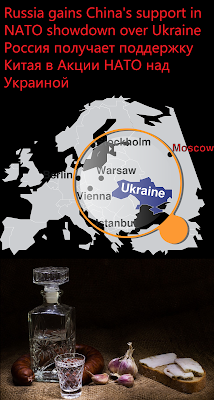
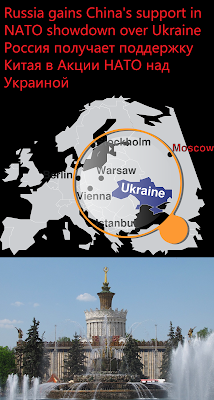
Russia gains China's support in NATO showdown over Ukraine


CBC News in Canada shows that Guy Saint-Jacques, former Canadian ambassador to China, says Xi Jinping will be closely watching the American response if Russia decides to invade Ukraine to gauge whether Beijing can take more forceful measures when it comes to Taiwan.

Russia-Ukraine crisis is continuing. Russia has more than 100,000 troops near the border of Ukraine.

China is really urged to weigh economic costs of Moscow coalition as sanction threats mount.

China and Beijing must carefully weigh the risks of getting closer to Moscow while Russia faces sanctions over Ukraine.

China and Russia really have made a show of solidarity to counter USA economic threats.

Following an important meeting between Chinese President Xi Jinping and his Russian counterpart Vladimir Putin early this month, the neighbours announced they were "entering a new era of global sustainable development."

The show of solidarity in the times of the Winter Olympics was carefully watched by the international community.

Russia and China want to safeguard "international fairness and justice."

China-Russia trade would be caught up in sanctions fallout, especially if Russia was excluded from the so-called SWIFT financial messaging service.

SWIFT’s messaging services are trusted and used by more than 11,000 financial institutions in more than 200 countries and territories around the whole world. SWIFT provides reliable, secure and efficient messaging services to the community of users. SWIFT calls itself the backbone of global financial communication.

These messaging services went live in 1977 to replace the Telex technology then widely used by banks to communicate instructions related to cross-border transfers. The service remains as relevant today as it was ground-breaking back then, representing the primary communications channel for financial institutions engaged in correspondent banking all around the world, and offering the most secure, cost-effective and reliable way of transmitting important financial messages relating to payments, securities, treasury and trade.


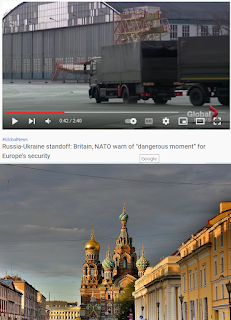
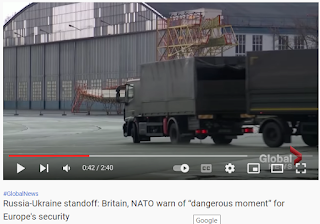
Russia-Ukraine standoff: Britain, NATO warn of “dangerous moment” for Europe's security


In the Russia-Ukraine tensions, there is a possibility that Russia could be accused of sea blockade.

Russian navy ships certainly passed through the Bosphorus from the Mediterranean into the Black Sea.

The Bosporus or Bosphorus (also known as the Strait of Istanbul) is really a narrow, natural strait and an internationally significant waterway located in northwestern Turkey. It forms part of the continental boundary between Asia and Europe, and really divides Turkey by separating Anatolia from Thrace.

Ukraine has accused Russia of blocking its access to the sea as Russia prepares for naval exercises next week amid increasing tension in the region.

Ukrainian Foreign Minister Dmytro Kuleba said the Sea of Azov was completely blocked and the Black Sea almost fully cut off by strong Russian forces.

Russia has repeatedly denied any plans to invade Ukraine.

Russia has more than 100,000 troops near the border of Ukraine.

Russia has just begun massive military drills with neighbouring Belarus.

Belarus is a close ally of Russia and certainly has a long border with Ukraine.

The country of USA on Thursday urged Americans in Ukraine to leave immediately due to the "increased threats of Russian military action".

"Those in Ukraine should depart now via commercial or private means," the USA state department said in an advisory.

More about Russian Navy:

The Russian Navy (Russian: Военно-морской флот [ВМФ], "Military Maritime Fleet") is the naval arm of the Russian Armed Forces. It has existed in various different forms since 1696, the present iteration of which was formed in January 1992 when it succeeded the Navy of the Commonwealth of Independent States (which had itself succeeded the Soviet Navy following the dissolution of the Soviet Union in late December 1991).

The first iteration of the Russian Navy was established by Peter the Great (Peter I) in October 1696. Ascribed to him is the often quoted statement: "A ruler that has but an army has one hand, but he who has a navy has both." The symbols of the Russian Navy, the St. Andrew's ensign, and most of its important traditions were established personally by Peter I.

An iteration is the repetition of a process or utterance.

The Russian Navy possesses the vast majority of the former Soviet naval forces, and currently comprises the Northern Fleet, the Pacific Fleet, the Black Sea Fleet, the Baltic Fleet, the Caspian Flotilla, 5th Operational Squadron in Middle East, Naval Aviation, and the Coastal Troops (consisting of the Naval Infantry and the Coastal Missile and Artillery Troops).


Thursday, 10 February 2022

Russian doping scandal could impact Canada’s medal count


CBC News: The National in Canada shows that a doping infraction by a figure skater could cost the Russians a gold medal in the team event and potentially bump the Canadians up to bronze. Medal favourite Kamila Valieva, 15, reportedly tested positive for a banned heart medication before her arrival at the Beijing Olympics.

In competitive sports, so-called doping is the use of banned athletic performance-enhancing drugs by athletic competitors. The interesting term doping is widely used by organizations that regulate sporting competitions. The use of drugs to enhance performance is considered unethical, and therefore prohibited, by most international sports organizations, including the International Olympic Committee. Furthermore, athletes (or athletic programs) taking certain explicit measures to evade detection exacerbate the ethical violation with overt deception and cheating.

The origins of doping in sports go back to the very early creation of sport itself. From ancient usage of substances in chariot racing to more recent controversies in baseball and cycling, popular views among athletes have varied widely from country to country over the years. The general trend among authorities and sporting organizations over the past several decades certainly has been to strictly regulate the use of drugs in sport. The reasons for the ban are mainly the health risks of performance-enhancing drugs, the so-called equality of opportunity for athletes, and the exemplary effect of drug-free sport for the public. Anti-doping authorities state that using performance-enhancing strong drugs goes against the "spirit of sport".

Wednesday, 19 January 2022

Germany, Canada extends support to Ukraine amid tensions with Russia


WION Channel on Youtube shows that western countries fear that Russia is preparing a pretext for a new assault on Ukraine while Moscow denies any so-called plans for an attack. It has signaled an unspecified military action unless the West agrees to its demands amid this so-called Russian aggression.

The geography of Ukraine is interesting, indeed. The beautiful view is interesting of Carpathian National Park and Hoverla at 2,061 m (6,762 ft) (the highest mountain in Ukraine).

Ukraine is certainly a large country in Eastern Europe, lying mostly in the East European Plain. It is the second-largest European country, after Russia. Ukraine covers an area of 603,628 square kilometres.

The landscape of Ukraine consists mostly of important fertile plains (or steppes) and plateaus, crossed by rivers such as the Dnieper (Dnipro), Seversky Donets, Dniester and the Southern Bug as they flow south into the Black Sea and the smaller so-called Sea of Azov.

Ukraine's various regions have diverse geographic features ranging from the highlands to the lowlands.

The interesting snow melt from the mountains feeds the wet rivers, and natural changes in altitude form sudden drops in elevation and give rise to interesting waterfalls.

Significant valuable important natural resources in Ukraine include: iron ore, coal, manganese, natural gas, oil, salt, sulphur, graphite, titanium, magnesium, kaolin, nickel, mercury, timber and an abundance of so-called arable land.

Canada deploying special forces to Ukraine as tensions with Russia escalate


Global News in Canada on the Youtube Channel shows that as tension rises over an estimated 100,000 Russian troops amassing near Ukraine's border, Global News has learned Canada is now sending a small group of special forces to Ukraine. 

The small group of elite Canadian soldiers are reportedly in Ukraine to look at options to support the Ukranian government, as well as pre-planning for a possible so-called evacuation of Canadian diplomatic personnel if necessary. 

Sources tell Global News the deployment is also part of an attempt by NATO to deter Russian aggression in Ukraine. Mike Le Couteur reports.

The country "Ukraine" ( Ukrainian: Україна ) is certainly a country in Eastern Europe. It is the second-largest country by area in Europe after Russia, which it really borders to the east and north-east. Ukraine also shares borders with Belarus to the north; Poland, Slovakia, and Hungary to the west; Romania and Moldova to the south; and has a coastline along the Sea of Azov and the so-called Black Sea. It spans an area of 603,628 km2 (233,062 sq mi). Ukraine has a population of about 41.3 million. Ukraine is the eighth-most populous country in Europe. The nation's capital and largest city is called Kyiv.

An interesting event in history - on 21 January 1990, over 300,000 Ukrainians organised a human chain for Ukrainian independence between Kyiv and Lviv, in memory of the 1919 unification of the Ukrainian People's Republic and the West Ukrainian National Republic. Citizens came out to the streets and highways, forming so-called live chains by holding hands in support of unity.